
Cooling Tower Restoration
A leaking cooling tower is expensive to replace. We restore it, hydroblasting the surface, rebuilding with 2-part foam, and sealing everything with a polyurea coating system that stops leaks and extends service life by years.
The Problem
Leaking Cooling Towers Don't Have to Mean Full Replacement
When a cooling tower starts leaking, most facilities assume the only option is a costly full replacement. The reality is that the majority of leaking towers can be fully restored at a fraction of the cost, if the right process is used.
Our restoration system combines high-pressure hydro blasting, 2-part foam structural rebuild, and a seamless polyurea coating to stop leaks, restore integrity, and add years of service life back to the structure.
Our Process
How We Restore a Cooling Tower
Start Here
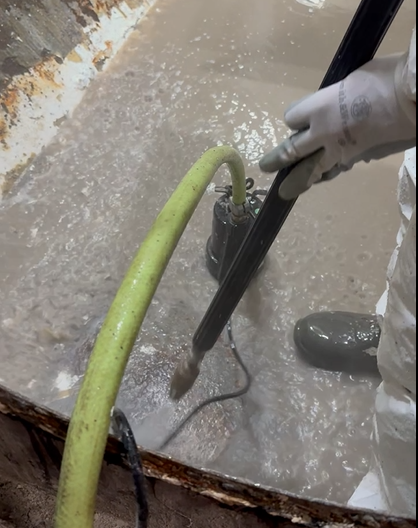
Hydro Blast Surfaces
We begin by hydro blasting the cooling tower to remove buildup, rust, and old coatings. High-pressure water jets strip away contaminants and debris, preparing every surface for restoration.
- Use high-pressure water jets
- Strip away contaminants and debris
- Prepare surfaces for restoration
Surface Prep
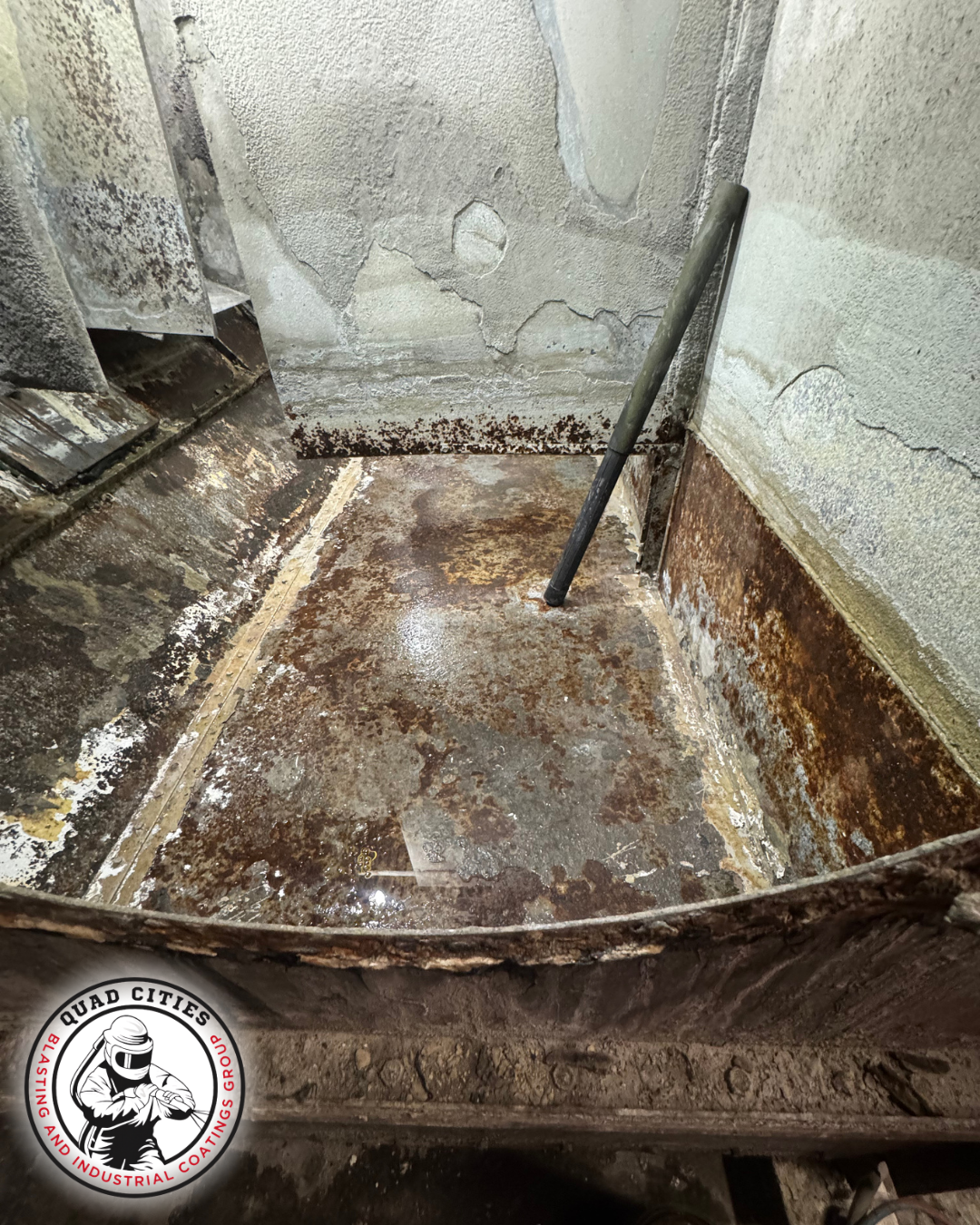
Drain and Dry
After blasting, the tower is fully drained and dried to ensure a clean, moisture-free surface. Industrial fans are used throughout to confirm the structure is ready for the next step.
- Drain all water from the system
- Use industrial fans for thorough drying
- Confirm surfaces are moisture-free before next step
Structural Rebuild
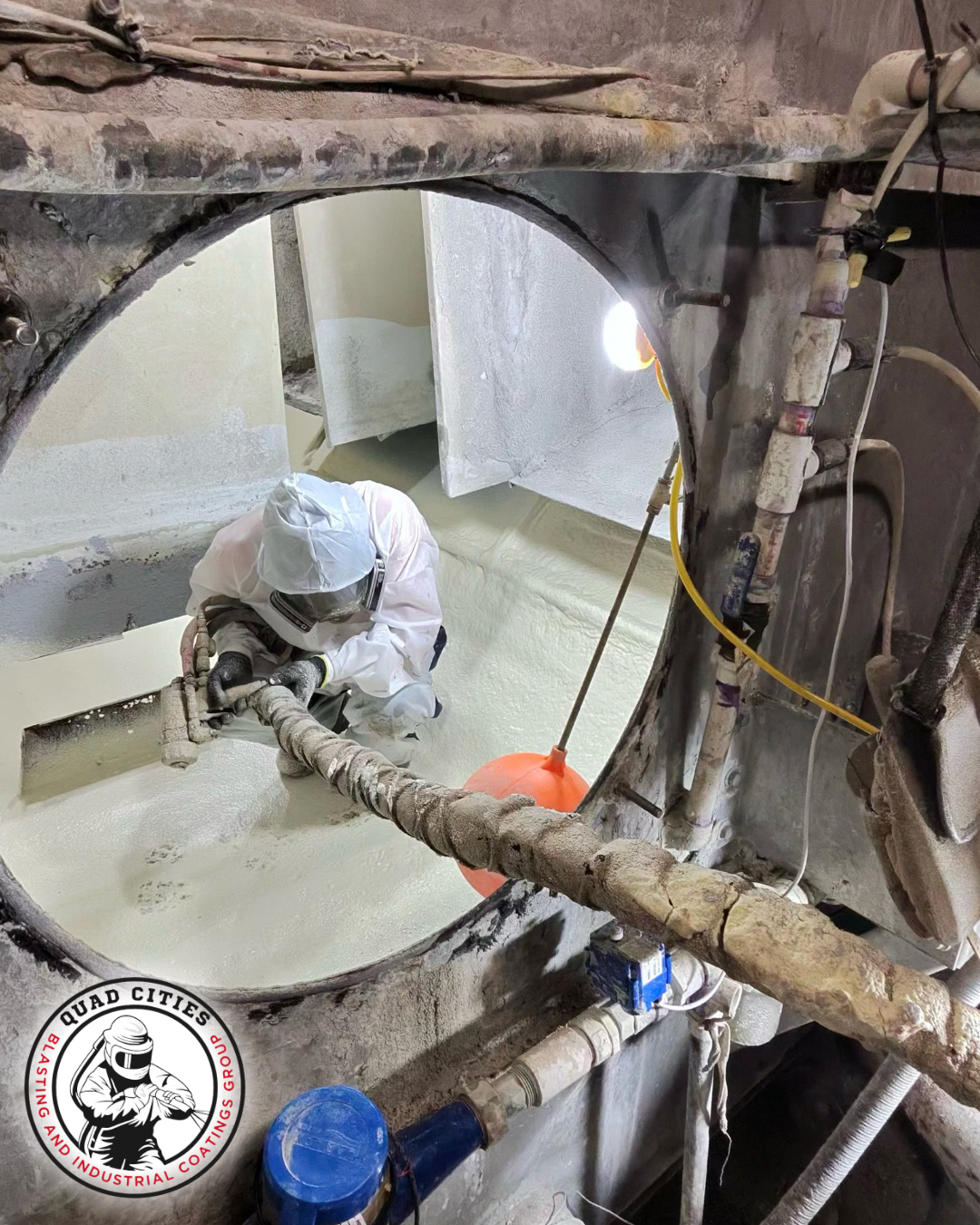
Apply Foam Layer
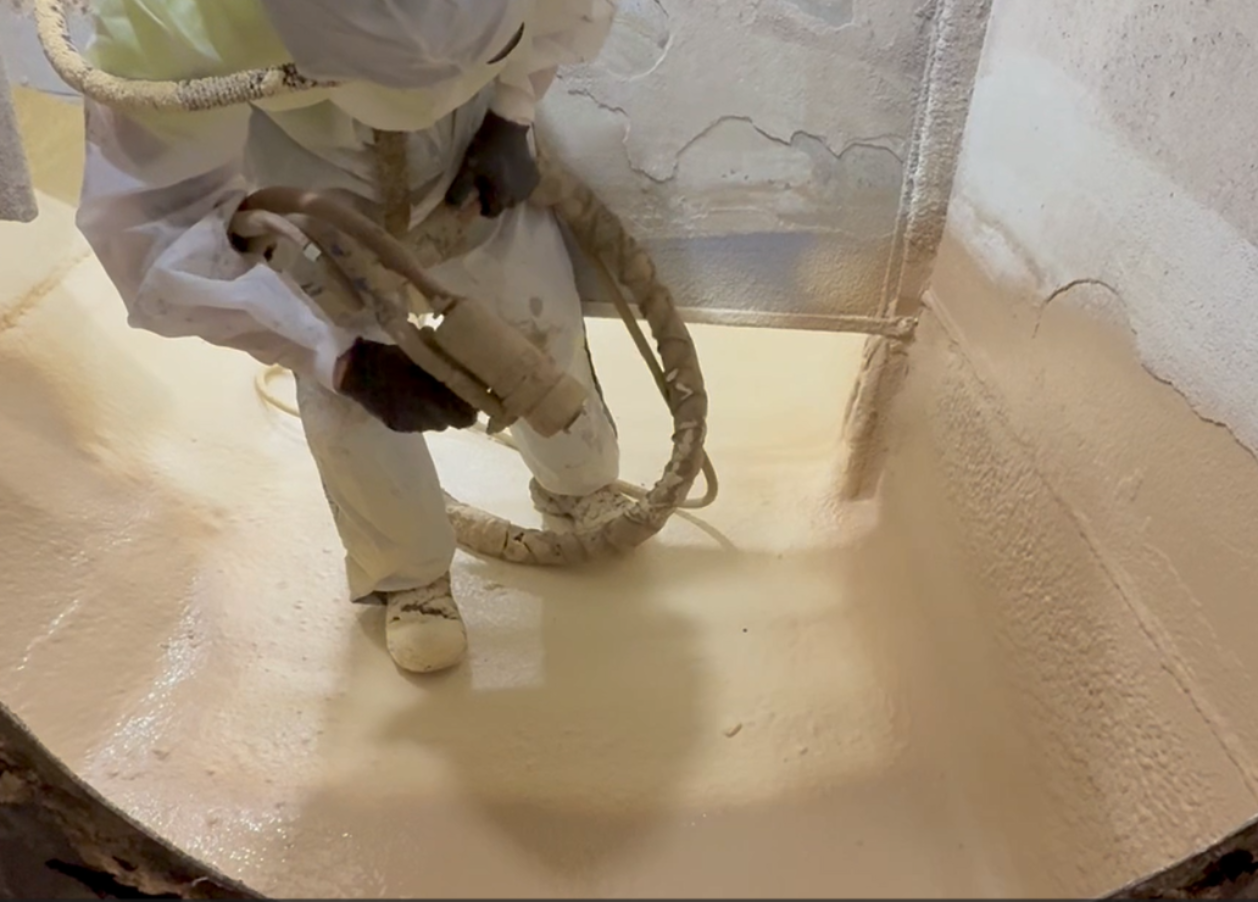
A specialized 2-part foam is evenly sprayed across interior surfaces to seal, insulate, and rebuild the structure. Full coverage is confirmed before allowing the foam to fully cure.
- Evenly spray foam across interior surfaces
- Ensure full coverage for insulation and sealing
- Allow foam to cure properly
Protective Seal
Coating Application
Industrial polyurea coating is applied over the cured foam to create a durable, seamless barrier against corrosion, leaks, and weathering. Every inch is inspected for uniform coverage.
- Apply industrial polyurea coating
- Create a durable barrier against corrosion and leaks
- Inspect for uniform coverage
Quality Check
Final Inspection & Testing
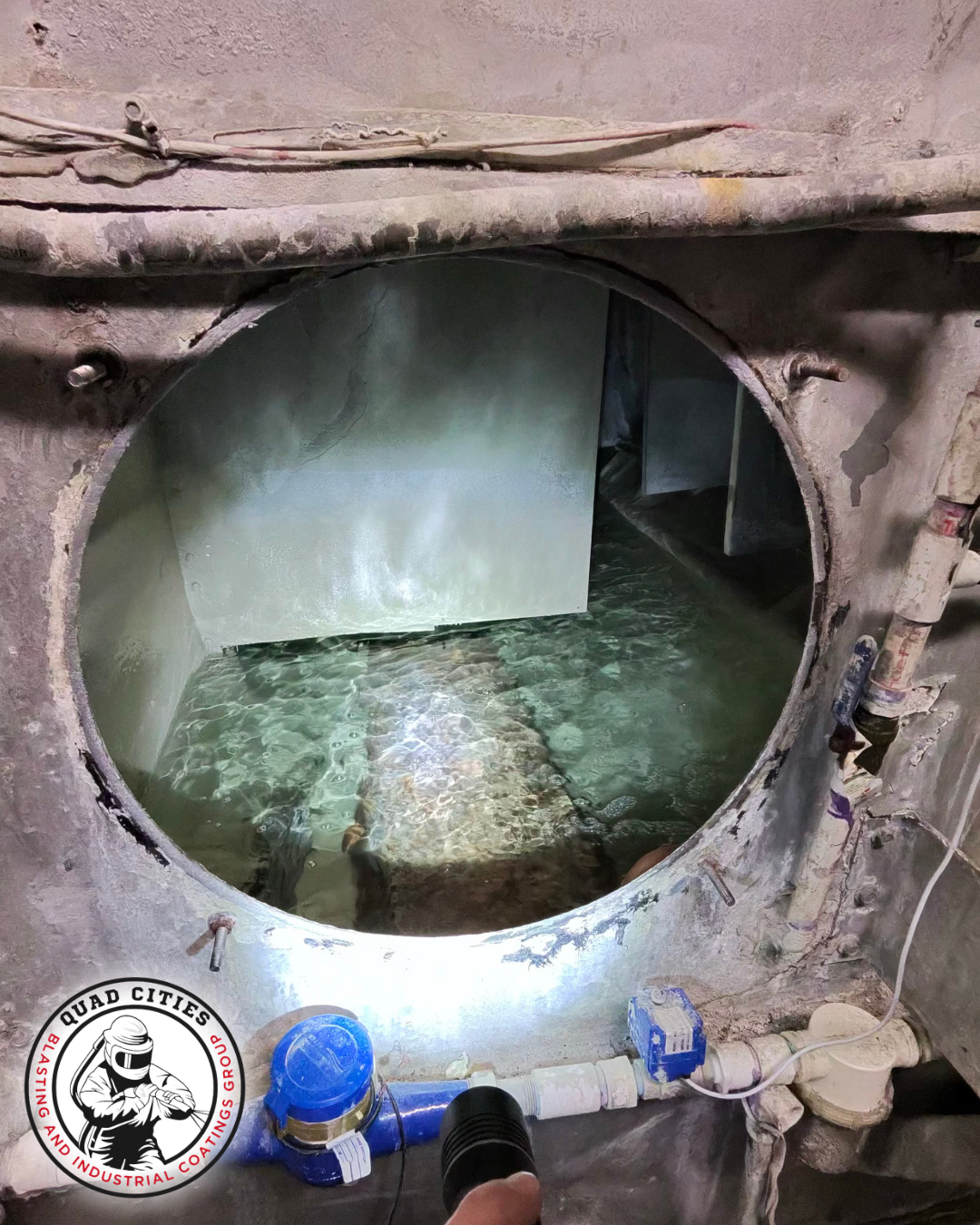
The restored cooling tower is tested for structural integrity and coating adhesion before being returned to service. We verify everything is sealed, solid, and ready for full operational use.
- Conduct structural integrity checks
- Verify coating adhesion
- Confirm tower is ready for operational use
Project Photos
From the Job Site
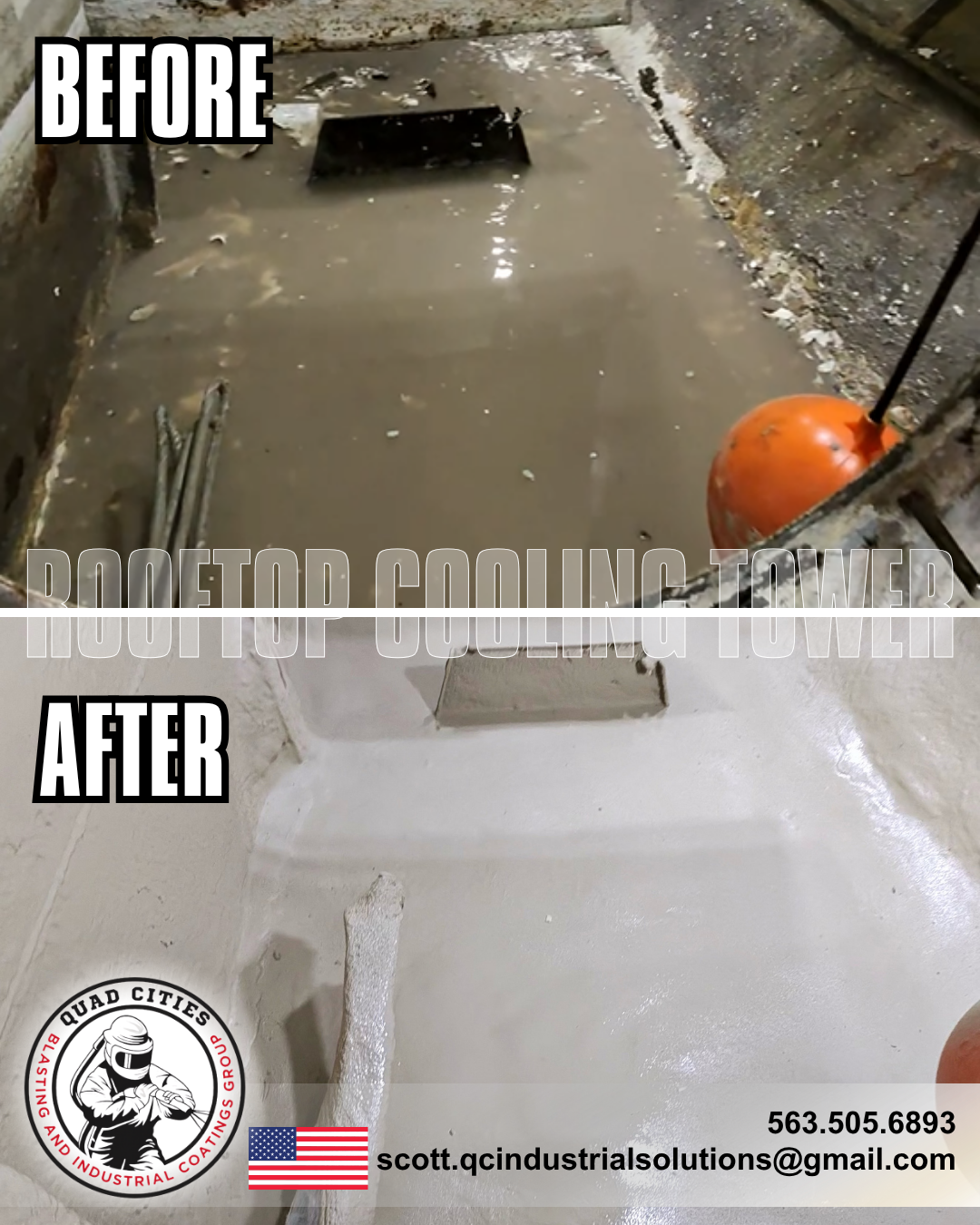
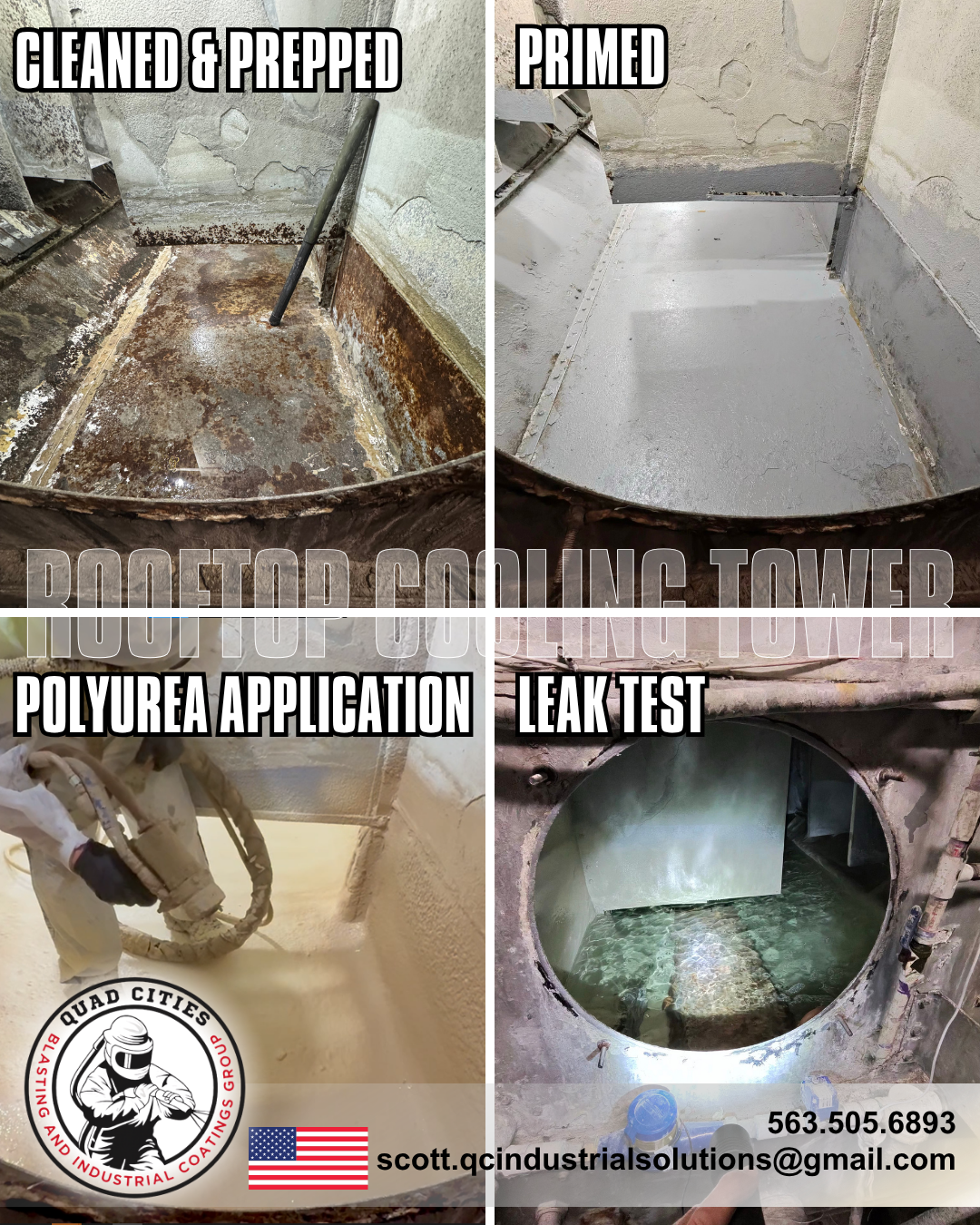
Click any photo and select Replace to upload your own project photos from this job.
Industry Insight
Why Restore Instead of Replace?
Cooling towers are critical infrastructure for industrial facilities, they regulate temperature across manufacturing processes, HVAC systems, and power generation. When one starts leaking, the instinct is often to budget for full replacement. But in most cases, that's the most expensive option available.
The real culprit behind most cooling tower leaks isn't structural failure, it's surface deterioration. Years of thermal cycling, chemical exposure, and moisture cause the interior surfaces to corrode, crack, and lose their waterproof integrity. The steel or concrete underneath is often still sound. What's failed is the surface layer.
The Restoration Advantage
Our process starts with hydro blasting, using high-pressure water jets to strip every surface back to clean, bare material. No chemical residue, no loose debris, no compromised adhesion. Once the surface is confirmed dry and clean, we apply a 2-part foam system to rebuild any deteriorated areas and create a uniform, insulated substrate.
The final step is the polyurea coating, a fast-curing, seamless elastomeric membrane that bonds directly to the foam and substrate. Polyurea is waterproof, chemical resistant, and flexible enough to handle the thermal expansion and contraction that cooling towers experience daily. It doesn't crack, it doesn't peel, and it doesn't need repainting.
What This Means for Your Facility
A properly restored cooling tower can add 10 to 20 years of service life at a cost that's typically 30 to 60 percent less than full replacement. Downtime is minimized because the restoration process is fast, most towers are back in service within days, not weeks.
If your facility has a leaking or deteriorating cooling tower, the first step is a site assessment. Our team will evaluate the structure, identify the extent of surface damage, and give you a straight answer on whether restoration is the right call, and what it will cost.
Published by Quad Cities Blasting & Industrial Coatings Group
Serving the Quad Cities region, Davenport, Rock Island, Moline, Bettendorf
Got a Leaking Cooling Tower?
Get a free site assessment and quote. We'll tell you straight whether restoration is the right call for your tower.